Two Hundred Nights in Wolf Country: A Researcher's Field Notes on Hunger, Loyalty, and Running Alone
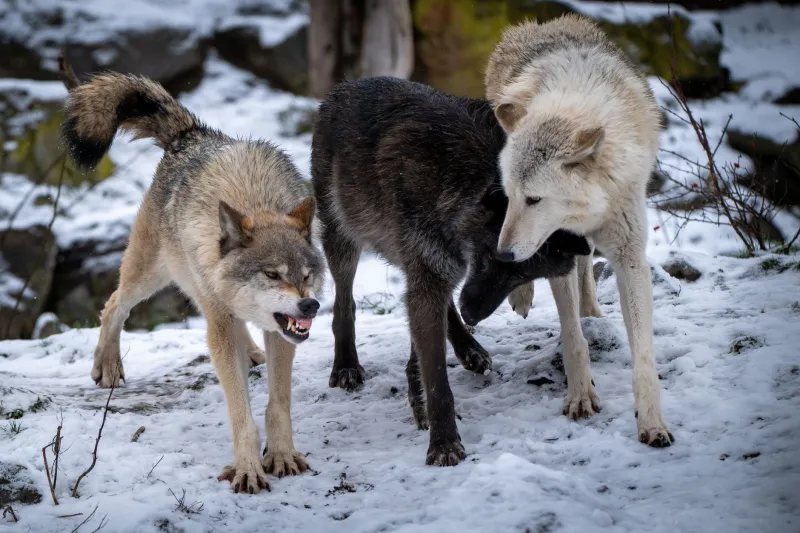
The first thing you notice about wolf country isn't the wolves. It's the quiet. Not silence — quiet. A living hush where every snap of a twig means something, and you learn fast that you're the only creature out here not listening on purpose.
Wildlife biologist Dana Kirchner spent fourteen months embedded with two wolf packs in Alaska's interior, most of it alone in a wall tent with a spotting scope, a satellite messenger, and a notebook that's now swollen with rain and coffee stains. I sat down with her at a diner outside Fairbanks — her pick, because "the coffee's bad but honest" — and asked what a year with the packs actually taught her.
Her answer surprised me. It wasn't about wolves, exactly.
The Pack Is Not a Family. It's a Bet.
Pop culture sells us the wolf pack as a nuclear family — mom, dad, pups, everyone howling in harmony. Kirchner laughs at that.
"A pack is a wager," she says. "Every animal is betting that cooperation today pays off in calories tomorrow. The moment that math stops working, the bet's off. Yearlings disperse. Old wolves strike out alone. Nobody holds a grudge."
The pack she followed closest — the one she nicknamed the Kettle River group — lost three members to dispersal in a single spring. No drama. No farewell howl. One day the young male's trail camera hits just stopped.
"There's a lesson there for anyone who's ever tried to build something with a crew," Kirchner says. "Loyalty isn't sentimental. It's transactional and it's real at the same time. You earn it by showing up with meat. Every day."
Hunger Is the Teacher
Wolves fail most of the time. Depending on prey and terrain, hunts succeed somewhere between 10 and 20 percent of the time. Kirchner watched the Kettle River pack chase a cow elk through waist-deep snow for nearly two miles and come up empty.
"They don't mope," she says. "They lie down in the sun, they sleep, and the next dusk they go again. Failure isn't an event for them. It's weather."
She keeps a sticky note in her truck that reads 20 percent. "On my worst field season, when everything's failing, I remind myself: the wolves are running at 20 percent and they're fine. Keep hunting."
What the Old Myths Got Wrong — and What They Got Right
America's relationship with the wolf has always been a fight between two stories. The settler myth: the wolf as devil, stock-killer, the thing that takes your livelihood in the night. The modern counter-myth: the wolf as noble eco-saint, the keystone predator of Yellowstone's rivers.
Kirchner has patience for neither.
"Both stories are about us, not them," she says. "The wolf doesn't care what you project. What it actually is, is a professional. It does one job, in terrible conditions, with a small team it would die for. That's the myth worth keeping."
Knowing When to Run Alone
The most striking thing in Kirchner's notes isn't about pack behavior at all. It's about the dispersers — the wolves that leave.
One young female she'd watched grow up struck out across sixty miles of frozen country, alone, through other packs' territory, before finding unoccupied ground and — eventually — a mate. She survived by being cautious, opportunistic, and utterly relentless.
"Every creative person I know has a dispersal moment coming," Kirchner says. "The day you leave the group, the studio, the safety of the pack, to go do the weird thing alone. The wolves don't romanticize it. They also don't avoid it. It's just the next right move when the math changes."
Field Notes from the Edge
A few entries from Kirchner's notebook, shared with permission:
- February 14. Minus 38. Pack bedded on the wind-scoured ridge all day. Not one of them shivered. What am I doing wrong.
- March 3. Alpha female led the hunt, then ate last. Position and sacrifice are not the same thing, apparently.
- May 19. Pups emerged from the den. Entire pack, adults included, took turns babysitting. Nobody billed anybody.
- September 8. The disperser's signal came back — 61 miles south, traveling with an unknown male. She made it. Of course she made it.
Kirchner's field season ended in October. She's back at her desk now, writing up the data, and she admits the transition is rough.
"People ask me if I miss the wolves," she says, stirring her bad honest coffee. "I miss the clarity. Out there, you always know what matters: the pack, the meat, the ground under your feet. Everything else is decoration."
That's the wolf you feed, maybe. Not the one from the old Cherokee story about the two wolves fighting inside every person — the good one or the bad one, whichever you feed wins. Kirchner's version is simpler and harder: feed the one that hunts, shows up, and knows when the pack's math has changed.
The rest is decoration.