Six American Hands Keeping Stone Sharp: Inside the Modern Flintknapping Revival
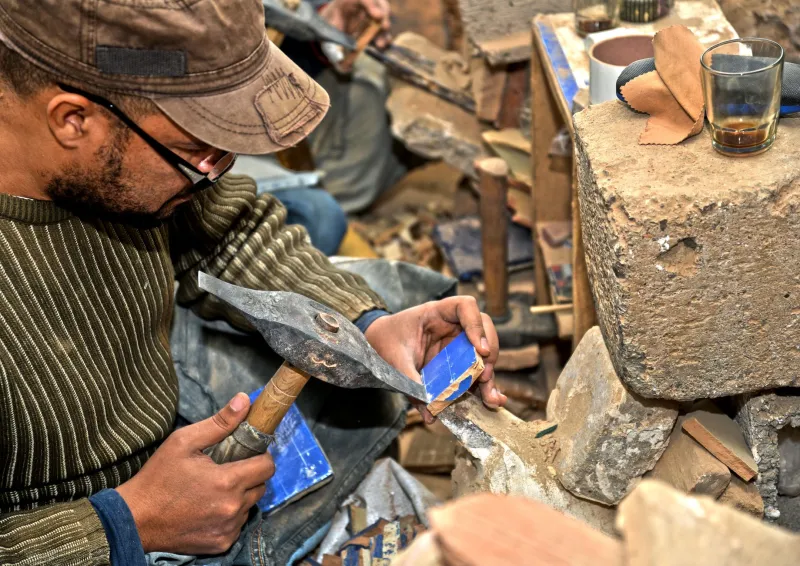
There's a sound you don't forget — the first time a copper biloqui strikes a piece of Texas chert just right and a flake the size of a playing card peels off with a tink that rings in your teeth. It's the sound of the oldest technology on this continent. And right now, in barns, garages, and trade school shops from Texas to Vermont, it's getting louder.
Flintknapping — shaping stone by controlled fracture into tools and blades — is having a moment. The Primitive Skills renaissance has pulled thousands of new folks toward friction fire and foraging, but knapping is its stubborn, patient cousin. It doesn't reward enthusiasm. It rewards repetition. Which might be exactly why it's growing.
Here are six makers worth knowing, and where you can get stone dust on your hands this year.
1. The Ranch Hand: Boquillas Blade Works — Hill Country, Texas
Randy Okafor learned knapping from his grandfather, a rancher who still put meat on the table with a bow in the 1950s. Today his Hill Country workshop turns out agate and Georgetown chert blades that could genuinely field-dress a deer. "Every rock has a grain, like wood," Okafor says. "Your job ain't to force it. Your job is to find the edge of what it already wants to do." He hosts one-day beginner workshops each spring — bring eye protection and humility.
2. The Archaeologist Who Sells What She Studies: Chert & Chalk — Columbia, Missouri
Dr. Priya Raman spent a decade cataloging Paleoindian points in Missouri before picking up a hammerstone herself. Her shop doubles as a teaching space where students knap replicas of Clovis and Dalton points from the same Ozark chert the originals were made from. "Holding a reproduction changes how you see the museum case," she told me. "You stop seeing artifacts and start seeing decisions. Thousands of them. Made by people exactly as smart as you."
3. The Appalachian Fair Circuit Legend: Grayson Ridge Points — Asheville, North Carolina
If you've been to a mountain craft fair anywhere in southern Appalachia, you've seen Earl McPhee's booth — a folding table buried in obsidian arrowheads, deer antler flakers, and a crowd four deep. McPhee has been knapping for 41 years and estimates he's taught over 3,000 people their first flake. His advice for beginners is famously blunt: "Buy the cheapest rock you can find. Break a hundred pounds of it. Then call me."
4. The Obsidian Source: Glass Buttes Gather — Central Oregon
Less a single maker than an annual pilgrimage, the spring knap-in at Oregon's Glass Buttes brings hundreds of flintknappers onto public land studded with rainbow, mahogany, and snowflake obsidian — free to collect with a hand shovel. First-timers show up with a hardware-store hammer and leave with a bucket of volcanic glass and a new obsession. It's the closest thing American knapping has to Woodstock, with more band-aids.
5. The Trade School Tie-In: Traditional Skills Program — Vermont
A small New England trades program has quietly added flintknapping to its traditional building-arts curriculum, pairing stone tool fundamentals with blacksmithing and timber framing. Instructor Wes Tallmadge sees the connection clearly: "Reading material — whether it's chert, iron, or oak — is the same skill. The tool changes. The eye doesn't."
6. The YouTube-to-Workshop Pipeline: Knap-In America — Nationwide
Former line cook Marcus Delgado learned to knap entirely from videos during a layoff, then turned it into a traveling workshop business that sets up at farmers markets and state parks across the Midwest. His starter kits — raw spalls, a copper bopper, safety glasses, and a laminated cheat sheet — have introduced an estimated 8,000 newcomers to the craft. "Nobody's making arrowheads to hunt with anymore," Delgado says. "They're making them because it's the opposite of a screen. It's slow, it's sharp, and it can't be refreshed."
Why Now?
The rise tracks with a broader hunger for work you can hold. In an economy of dashboards and notifications, knapping offers the rare luxury of a finished object and total presence — you cannot knap distracted without bleeding. It's also cheap to start: a beginner kit runs less than a nice dinner, and a driveway full of broken rock is a perfectly respectable tuition.
There's something deeper, too. Every point made today sits in a lineage that runs back through the Folsom and Clovis cultures to people who crossed into this continent with nothing but what they could knap. Striking stone is the shortest available distance between modern life and that world.
Strike Your First Spall
Ready to try? Three steps:
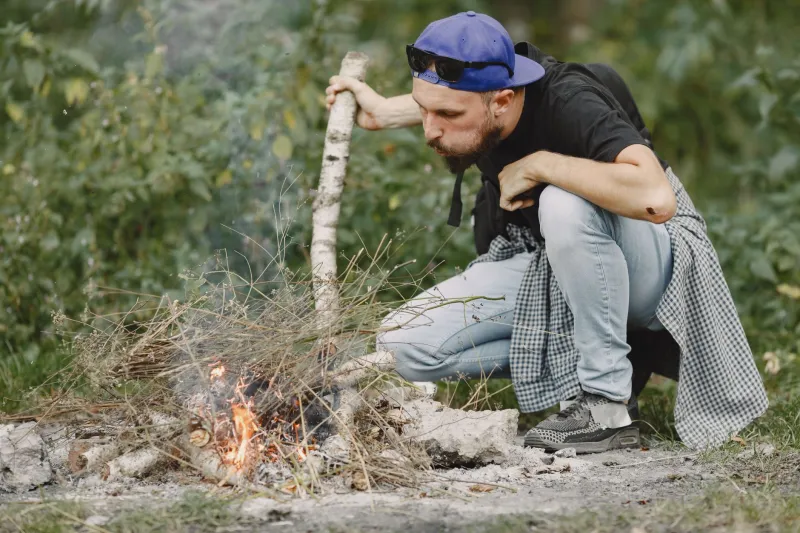
- Get safety gear first. Safety glasses and leather palm pads. Stone flakes are razor sharp — that's the whole point.
- Buy cheap material. Novaculite spalls, Georgetown flint, or a bucket of Glass Buttes obsidian. Don't start with expensive slab.
- Find a knap-in. Search "flintknapping gather" plus your state; there are dozens of public events across the US every year, and knappers are famously generous with instruction.
Your first hundred attempts will look like a raccoon attacked your driveway. That's fine. Every master knapper alive owns a garbage can full of failures.
Strike anyway. The stone's been waiting thirteen thousand years.