Trading the Treadmill for the Tinder Bundle: Inside America's Wilderness Skills Boom
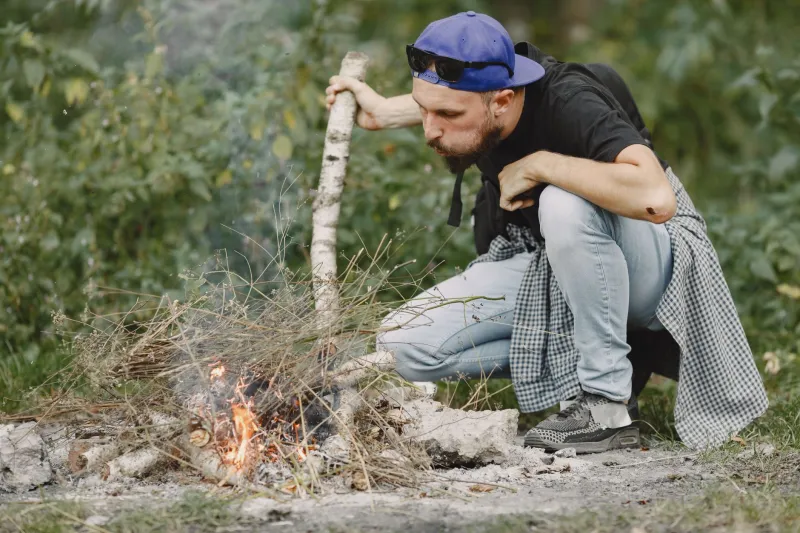
The waitlist at Jack Mountain Bushcraft School in northern Maine runs months long. In Montana, survival instructor camps report their busiest seasons ever. Somewhere between the pandemic's great screen migration and whatever's happening on our group chats, a whole lot of American men decided the gym wasn't cutting it anymore — and signed up to learn friction fire instead.
The question worth asking isn't whether this trend is real. Bookings say it is. The question is what, exactly, all these guys are out there looking for.
The Numbers Don't Lie, But They Don't Explain Either
Outdoor industry data has shown steady growth in camping, hunting, and backcountry participation for years, and the niche end of that spectrum — primitive skills, bushcraft, long-term wilderness immersion — has grown right along with it. Schools that once scraped by on weekend workshops now run multi-week immersion programs with waiting lists.
But demographics only tell you who's showing up. They don't tell you why a 38-year-old project manager from Denver is spending a vacation shivering over a bow drill in the rain.
Screen Fatigue Is the Obvious Answer. It's Also the Easy One.
Ask the students and you'll hear it constantly: too many hours in front of the monitor, too many days where the only physical accomplishment was closing browser tabs. There's a real hunger for tasks with clear feedback — a fire either burns or it doesn't, and no app is involved.
"The first time a guy gets a coal with a hand drill, something clicks," one instructor in the Pacific Northwest told me. "Not because fire is magic. Because he did a hard thing with his hands and the world confirmed it. Most of us haven't had that since Little League."
That tracks. But screen fatigue alone doesn't explain the specifically masculine cast of this migration — the beards, the wool, the wolf-and-flint aesthetic that dominates the Instagram feeds feeding the trend.
The Identity Vacuum
There's a quieter driver underneath, and every honest instructor I spoke to eventually circled it: a lot of men feel under-tested. Traditional markers of competence and contribution have shifted, work is often abstract, and the culture's old scripts about what makes a man useful have been revised faster than most guys have found replacements.
Wilderness skills slot neatly into that gap. They're legible. Build shelter, make fire, find water, carry your pack. The framework is old, the feedback is honest, and nobody needs a job title to feel competent around a campsite.
Whether that's healthy depends on who you ask. Critics see 'functional masculinity' culture as repackaged nostalgia — rugged cosplay for men who drive home to a heated apartment afterward. And honestly, some of it is. There's a version of this where the woods are just another content backdrop.
When It Sticks — and When It Doesn't
The split I kept hearing about comes down to what happens after the weekend.
The guys who come back changed tend to be the ones who brought something home: a weekly practice, a skill ladder, a group that keeps meeting. The guys for whom it was a rugged bender come back with great photos and a $300 knife they'll use to open boxes.
"I can tell in the first day who's here to become somebody and who's here to feel like somebody," a Montana instructor put it. "The second guy is fine. He'll have a good time. But the first guy — he'll be back in the spring."
One first-timer, a 29-year-old nurse from Ohio, put it more plainly: "I don't need to live off-grid. I just wanted one weekend where I was the most capable person in the situation. I got that. It changed how I walk into rooms."
So Is It Transformation or Cosplay?
Both, mostly. Every meaningful subculture attracts tourists and converts in roughly equal measure, and there's no reason this one should be different. The cosplay crowd funds the schools that train the converts. The wolf-and-flint branding is marketing, sure — but marketing that occasionally puts a flint striker in a man's hand and changes what he thinks he's capable of is marketing doing honest work.
The deeper truth is that most of these men aren't running from anything. They're running toward a version of themselves they can verify. The woods are just the only place left where the test can't be gamed.
Five Ways to Test Your Own Grit This Season
1. One-night solo, close to home. No permit drama, no epic drive. A state forest site, a tarp, a fire you built yourself. Keep it simple; keep it real.
2. A weekend bushcraft course. Nearly every region has one — look for local instructors over influencer outfits, and check reviews for actual teaching, not just content creation.
3. Learn three fire methods before winter. Ferro rod, lighter-and-birch, and one friction method. The third one will humble you. That's the point.
4. Join a volunteer trail crew day. Free, physical, and you'll meet the kind of people who actually go outside.
5. Cook one full meal over a fire you built. Not a grill. A fire. There's a difference, and you'll taste it.
Start small. Feed the right wolf. See what's still standing when you come home.