No Parts Store for 200 Miles: A Season as the Last Mechanic in the Brooks Range
The Cessna dropped me off on a gravel bar outside a place that wasn't quite a town, and the pilot didn't shut off his engine while we unloaded. That should've been my first clue. Nobody lingers in a place like that unless they have to.
I'd taken the gig half on a whim: a summer as the only mechanic within a few hundred miles of the Brooks Range, keeping a scattered fleet of generators, snowcats, hunting rigs, and one very temperamental water pump running for a handful of outfitters and homesteaders. No parts store. No tow truck. No cell signal worth naming. If I couldn't fix it, it stayed broken until the weather or the mail plane said otherwise.
The Day the Hose Didn't Exist
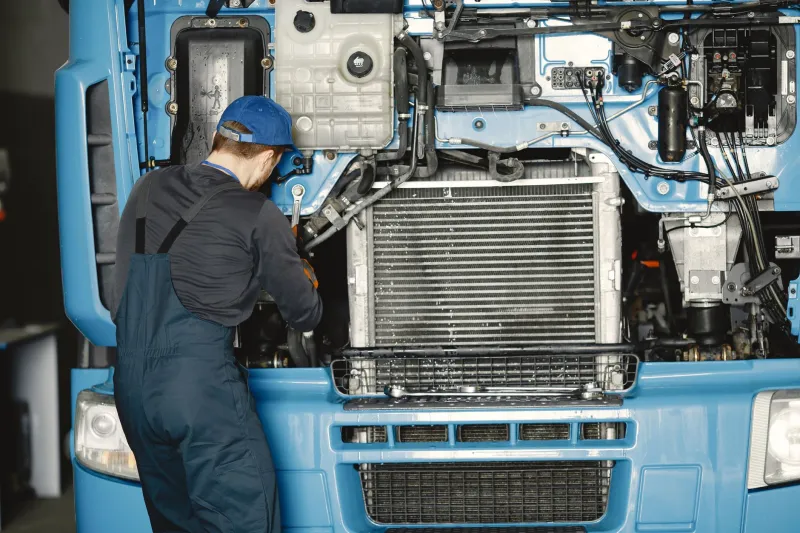
Week two, a guide's truck cooked its upper radiator hose forty miles up a hunting track. The right part existed somewhere in a catalog, in a warehouse, in a universe I no longer lived in. What I had was a roll of fuel line, hose clamps, a Buck knife, and a creek.
We spliced it, zip-tied a section of plastic bottle over the weak spot as a heat shield, filled the system with creek water because that's all there was, and limped home at a pace that would embarrass a mule. It got us back. It got us back the next weekend too.
That's when the summer stopped being a job and started being an education.
Lesson One: Inventory Is a State of Mind
Back home, my garage was a shrine to buying whatever I needed, whenever I needed it. Out there, the question wasn't "do I have the part?" It was "what do I have that could become the part?"
A broken throttle cable became a bicycle brake cable. A stripped oil drain plug got rethreaded with a bolt and a jam nut. I started seeing hardware the way a cook sees leftovers — nothing gets thrown out until you've imagined it as something else. That habit has followed me home. I've never bought fewer tools or used them more.
Lesson Two: Panic Is More Expensive Than Parts
The coldest night of the summer, a generator feeding a remote hunting camp died at 2 a.m. The guy running the camp called me on the sat phone, and I could hear it in his voice — that tight, thin tone of a man watching his warmth evaporate.
I made myself brew coffee first. Not because I'm philosophical, but because my hands shake when I rush, and shaky hands drop bolts in the dark. The fault turned out to be a fouled plug I found in twenty minutes. The twenty minutes of coffee probably saved me two hours of fumbling.
Out there, calm isn't a virtue. It's a resource, same as diesel. You spend it wisely or you run dry.
Lesson Three: The Manual Is a Suggestion, the Machine Is the Truth
Every engine I met that summer had already been modified, patched, or abused by somebody before me. The service manual described a machine that hadn't existed in years. So I learned to read the machine itself — the wear patterns, the color of the exhaust, the sound of a bearing that's thinking about quitting.
There's a version of this lesson in every part of life. The documented way is where you start. The actual situation is where you finish.
Lesson Four: Ask the Old-Timer, Even If He's Weird
The nearest thing I had to a colleague was a seventy-something trapper named Earl who lived eight miles downriver and communicated mostly in monosyllables and coffee refills. Earl had fixed engines with moose hide and spite since before I was born.
Twice that summer, a problem I'd fought for hours was solved by one sentence from Earl. Not because he was smarter — because he'd watched a hundred machines die and remembered how. The bush doesn't reward pride. It rewards asking.
Lesson Five: Carry More Fuel Than You Think, in Every Sense
Fuel, spare filters, wire, baling twine, food, patience. Every single thing I rationed too tightly came back to bite me, and every time I over-provisioned, I never once regretted it. Redundancy looks like paranoia right up until it looks like wisdom.
Lesson Six: Some Things You Fix by Leaving Them Alone
I cracked a cast aluminum case once by over-torquing a bolt because I couldn't stand to leave the job unfinished overnight. The next morning, fresh-eyed, I realized in ten seconds that the real fault was upstream. Rest is a repair. I wish I'd learned that at thirty instead of paying tuition on it at altitude.
Lesson Seven: Competence Is a Kind of Peace
Flying out at the end of the season, I looked down at the gravel bar and realized I wasn't the same guy who'd landed there. Not because I'd conquered anything dramatic — I'd just spent four months proving to myself, over and over, that when something breaks and nobody's coming, I can be the somebody.
You can't buy that. You can't stream it. You have to go somewhere the parts don't exist and build it out of what you brought with you.
Bring more than you think you need. Especially the calm.