One Chair, One Town: The Last Barbers Standing Between America and the Great Clip
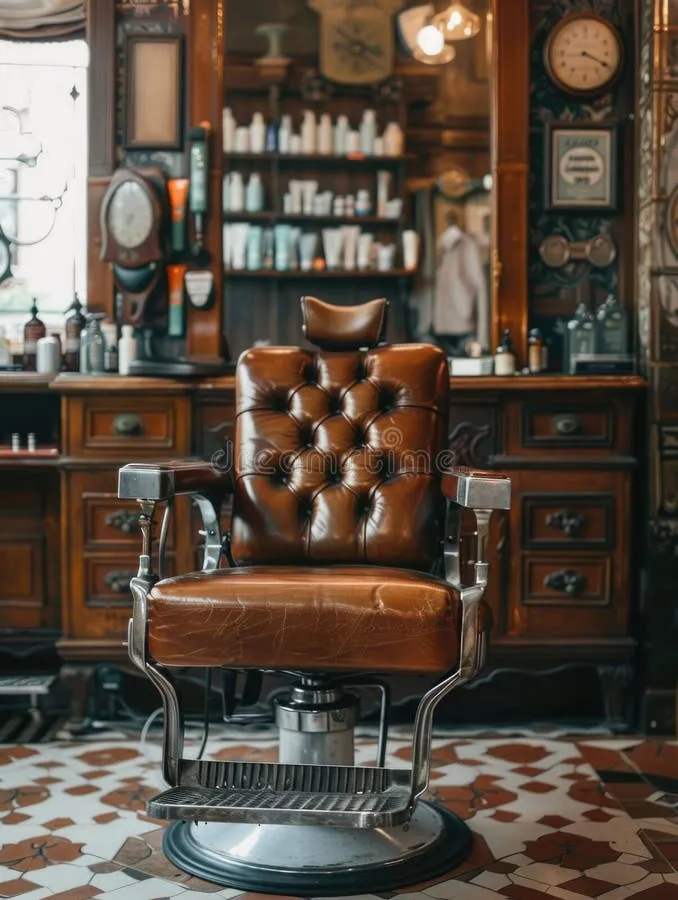
Photo: vintage one-chair barbershop small town interior old barber chair, via thumbs.dreamstime.com
The sign out front of Dale's shop in Arthur, Nebraska reads BARBER in faded gold letters, and underneath it, hand-painted in smaller type: BACK IN AN HOUR, GO GET COFFEE, I'LL BE HERE.
That's the whole business model. There's no booking app, no Instagram, no square reader taped to a cracked iPad. There's a chair — one chair, hydraulic, chrome, older than Dale himself — a mirror with a hairline crack running through it like a river on a map, and a leather strop hanging from a nail that his father hung there before him.
The Chair Is the Town Square
Spend an afternoon in a one-chair shop and you start to understand something about small-town America that no chamber of commerce brochure will tell you: the haircut is incidental. The haircut is the cover charge.
Dale charges eighteen bucks. He'll be under the chair's worn leather most of a Tuesday, and in that time he'll learn who's selling their acreage, whose kid made all-state, which ranch hand got thrown by a horse and which one got thrown out by a wife. He'll settle a minor dispute. He'll pass along a phone number for a guy who tows on the cheap. When the county road grader comes through, the operator swings by not for a trim but to talk.
Nobody in Arthur would call this an institution. Institutions have plaques. This is just Tuesday.
When the Light Goes Out, So Does the Town
Here's the part that keeps small-town chroniclers up at night: when the one-chair shop closes, the town doesn't just lose a service. It loses a node.
Sociologists have a term for these places — "third places," the spots that aren't home and aren't work where community actually happens. In a town of three hundred, there might be two: the diner and the chair. Lose one and the whole social circuit collapses inward. The retired farmer who came in every other Saturday now drives forty-five minutes to a chain salon in the county seat, where nobody knows his name and the small talk is about weather in a place he's never been.
And it's not just gossip that evaporates. One-chair barbers are informal first responders. Dale has jumped trucks in the parking lot, driven a seizure patient to the hospital in Ogallala, and once talked a young man off the rail bridge because the kid came in for a haircut and Dale noticed his hands. You can't train for that at a franchise.
The Economics of Stubbornness
The math of a one-chair shop shouldn't work. Overhead is low but so is volume — maybe fifteen cuts a day in a good week, cash in a cigar box, a Social Security check filling the gaps. Dale hasn't raised his prices since 2019 because, as he puts it, "half my customers are on a fixed income and the other half would tell me if I did."
The barbers who survive share a few traits. They own the building. They married someone with health insurance or went without. And they never, ever planned to retire, because the shop is the retirement. The alternative is a quiet house and a television, and every one of them has watched a buddy fade fast after locking up for the last time.
There are fewer of them every year. Licensing boards, insurance costs, and the simple physics of aging thin the ranks. Barbering schools churn out graduates who want city shops with six chairs and color bars. Nobody's lining up to take over a chrome-and-leather antique in a town with one gas station.
What Gets Left Behind
The mirror in Dale's shop holds decades of snapshots — kids' school photos, a funeral card, a photo of a dog that's been dead fifteen years. The wall by the door holds a rack of hats that belong to nobody and everybody.
If you ask Dale what happens when he's done — and people do ask, usually mid-cut, the way you ask a man things when you've got a towel around your neck — he shrugs. "Somebody'll buy the building. Put in an antique store or a vape shop. The chair'll probably end up in a museum in North Platte, and they'll put a little card next to it that says it was important."
He snaps the cloth off the man in the chair, brushes his shoulders, and spins the chair toward the mirror.
"It wasn't important," he says. "It was just here."
Out on the highway, the wind is doing what it always does. The sign says OPEN. Dale will be here.