Four A.M. and the Coffee's Still Hot: The Diner Owners Who Never Learned to Lock Up
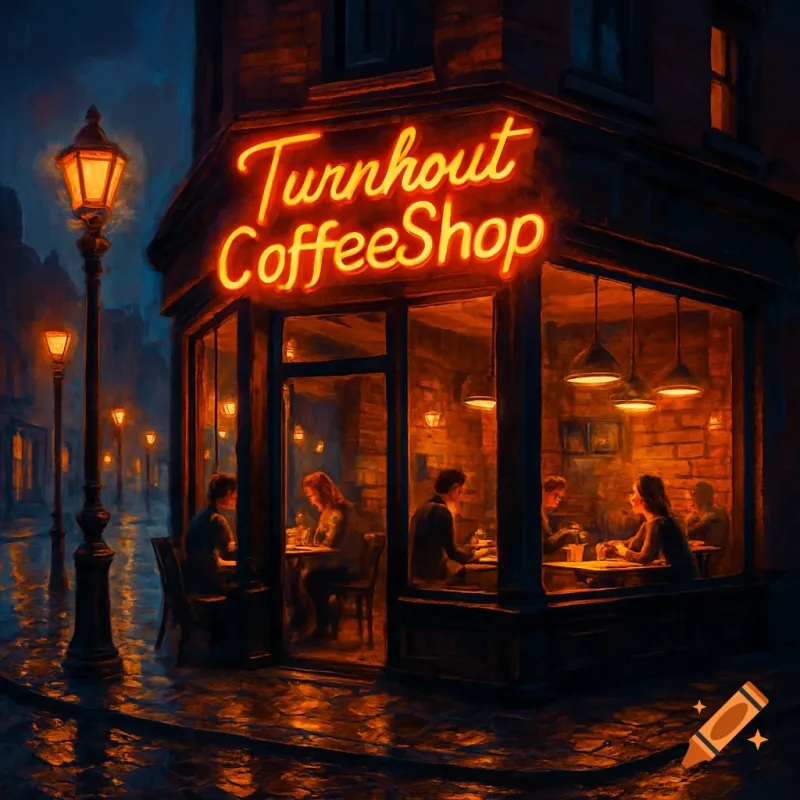
Photo: small town diner interior at night neon sign roadside coffee, via media.craiyon.com
The sign on the door of the Wagon Wheel in central Nebraska doesn't say OPEN. It says: If the lights are on, come on in. Coffee's on.
It's 4:07 on a February morning and the lights are on. The thermometer outside reads nine degrees. Inside, a freight hand in a Carhartt jacket is working through his second cup before his eggs arrive, and the only sounds are the hiss of the flat-top and a local AM station muttering grain prices through a speaker that's older than the cook.
Nobody locked this door last night. Nobody locks it most nights.
The Unwritten Hours
There's a stretch of the American map — you know it if you've driven it — where the towns thin out and the road goes quiet between gas stops. On those stretches, a diner with its windows lit at 4 a.m. isn't a business. It's a lighthouse.
The economics make no sense. The overnight shift might serve six people. Maybe ten if there's a hunt coming or a blizzard stranding folks. The Bunn brewer gurgles through pot after pot that never gets fully drunk. The Beacon griddle hums for hash browns that cost less than the propane to cook them.
So why do it?
"Because somebody's out there," says Doreen, who's run the Wagon Wheel with her sister since 1994. "And you don't get to pick what kind of night they're having."
Three Keepers of the Flame
Doreen learned the trade from the previous owner, a Greek immigrant named Gus who told her the same thing every closing shift: You don't close a door on a road like this. The road remembers.
Two hundred miles east, in a county in Iowa where you can hear the interstate but not see it, Ray keeps a pot of chili on a low burner from midnight on. He's 71. His daughter wants him to sell to a chain that would open at 6 sharp and shutter at 2 in the afternoon.
"Then who feeds the guy whose truck slid in the ditch at three?" Ray asks. It's not rhetorical. He's done it — fed the ditched driver, let him thaw out, sent him to the motel with a thermos.
And down in the Missouri Ozarks, a woman named Carlene runs a place with a hand-painted sign and a policy posted by the register: No one leaves hungry. No one leaves broke who didn't come in broke. There's a coffee can by the till that's been there twenty years. Strangers who can't pay drop what they can. Regulars cover the rest. Carlene doesn't keep books on it.
"It balances," she says. "It always balances. Maybe not the same week. But it balances."
What the Light Actually Does
Spend enough midnights in these places and you start to understand they're not really restaurants. They're infrastructure — the kind nobody budgets for.
The long-hauler who can't log another mile and needs soup before sleep. The kid who ran out on a bad marriage with a gas tank and half a wallet. The deer hunter coming home empty-handed and frozen. The nurse driving between rural hospitals who knows exactly which diner on Route 36 will have pie at 3.
They all know the light. They plan around it. And when one of these places goes dark — and they're going dark all the time — the route changes, the stops get longer, and the stretch of highway between warm points gets a little more dangerous and a little more lonely.
There's no app for what these diners do. No Yelp category for will feed you at 4 a.m. and not ask too many questions. You can't franchise trust.
The Math Nobody Wants to Do
Here's the hard truth: Doreen clears less in a month than most of us make in a week of good tips. The building needs a roof. The fryer's held together with prayer. Insurance goes up; the trucking routes that once fed her counter now bypass the county entirely.
Every one of these owners has a story about the night they almost quit. And every one of them has a story about the stranger who walked in at some ungodly hour and reminded them why they don't.
Ray tells it best: "A young fella came in once, maybe 3 a.m., sat down, and just started crying. Didn't order nothing. I set a plate in front of him anyway. He ate, paid, and left. Six months later a card comes. He'd made it home, made it right with his old man, got a job. Said the eggs were the first thing that tasted like anything in weeks."
He shrugs. "You can't put that on a spreadsheet. But I've seen it. It's real."
Keep the Light On
The next time you're crossing Nebraska, or Iowa, or the Ozarks, or any of the thousand two-lanes where the dark gets personal — when you see that one lit window with a coffee pot waiting — pull in. Order the eggs. Tip like it matters, because it does.
And if you can, leave a little extra in the can by the register.
It always balances. Maybe not the same week. But it balances — as long as somebody keeps the light on.