3 A.M. at the Fuel Island: Where the American Night Shift Goes to Confess
Photo: Achim Raschka (talk), CC BY-SA 4.0, via Wikimedia Commons
The lot at the Little America outside Rawlins, Wyoming, is a city that assembles itself after dark. Semis nose in at angles only a driver understands. Headlights sweep the fuel island like lighthouse beams. And somewhere in the cab of a Peterbilt idling at the far edge, a man from Missoula is eating a gas station burrito and talking to nobody about everything.
I spent seven nights out here — Billings to Cheyenne and back — riding shotgun with long-haulers and loitering at the counter with the overnight crew, trying to figure out what these places actually are. What I found is that the truck stop is the last genuinely wild gathering spot in the country. No algorithm curates it. No one performs for it. It's part campfire, part machine shop, part confessional, and it only fully wakes up after midnight.
The Counter at 2:40 A.M.
The night crew at a truck stop is not a morning person. They are a different species entirely — patient, unbothered, fluent in exhaustion. Deb, who has worked the overnight shift at a pilot travel center outside Casper for eleven years, describes her job as "refueling people, not just rigs."
"You get a driver in here at three in the morning who hasn't talked to a human being in four days," she told me, restocking the roller grill like it was a sacred rite. "He don't need small talk. He needs somebody to look him in the eye and say 'safe travels, brother.' That's the whole job."
There's an unspoken liturgy to it. The coffee is always hot. The booth by the window is understood to belong to whoever's been on the road longest. Nobody rushes anybody. In an America that has monetized every spare second of attention, the 3 a.m. counter runs on a different clock — one measured in miles behind you and miles ahead.
CB Folklore Is Still Alive, It Just Sounds Different
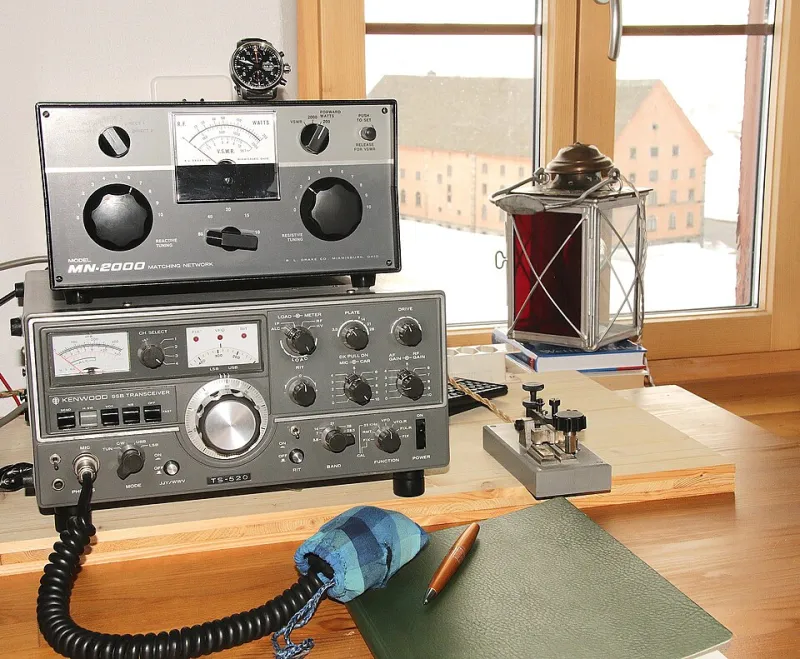
Every subculture has its mythology, and the road's is broadcast on Channel 19. The CB radio scene isn't dead — it's evolved. Sure, drivers have apps and Bluetooth now, but the radio remains the campfire where stories get told, exaggerated, and retold until they're legend.
One driver named Ray, hauling cattle feed out of Billings, keeps a running catalogue of what he calls "road ghosts" — tales passed driver to driver like folklore: the stretch of I-90 where trucks always seem to lose a tire, the weigh station that's been "under construction" since the Obama administration, the rest area where a hitchhiker in a denim jacket keeps getting picked up and keeps disappearing.
"You don't have to believe it," Ray said, elbow out the window, coffee between his knees. "You just have to pass it on. That's how the road remembers things."
That's the wolf in this story, if you want one. The road keeps its own pack — loose, temporary, bound by headlights and shared exhaustion rather than blood. Every driver out here is running alone, but nobody out here is truly alone.
The Unspoken Code
Spend enough nights on the lot and you start to notice the rules nobody wrote down:
- You back into your spot on the first try or you accept the mockery with grace.
- You knock on a stranger's door only for a good reason — a mechanical problem, a medical issue, weather. Never otherwise.
- You leave your headlights off in the lot after 10 p.m. Blinding a sleeping driver is a sin.
- If a truck's been parked too long and nobody's seen the driver, you check. You always check.
That last one came up more than once. There's a vigilance out here that city folks would call paranoia and drivers call Tuesday. When your neighbor's front door is a foot from yours and the nearest town is eighty miles of nothing, watching out for each other isn't a slogan. It's infrastructure.
Confession at the Fuel Island
Here's what surprised me most: how much people tell you. Something about the hour, the noise of a reefer unit humming, the fact that you'll likely never see each other again — it loosens the jaw.
A driver outside Sheridan told me he missed his daughter's wedding because a shipper lied about load times. A night manager in Gillette told me she keeps a drawer of phone chargers she's lent out and never gotten back, and she doesn't want them back. A retired hauler drinking his fourth coffee at 4 a.m. told me he still dreams about specific interchanges — not the destinations, just the road itself.
"People think we drive for a living," he said. "We don't. We leave for a living. Driving's just what happens in between."
The Wild Edge Is Where You Find It
Flint & Wolf was built on the idea that the wild edge isn't always a mountain. Sometimes it's a fuel island in the Wyoming wind at 3 a.m., where the coffee's burnt, the folklore's alive, and a stranger will tell you the truest thing you'll hear all week.
The truck stop is America's last campfire. It's not romantic — nothing about a diesel shower at 2 a.m. is romantic. But it's real, it's uncurated, and it runs on the oldest fuel we've got: people looking out for people who are running alone.
Pull over sometime. Pocket a spark. Listen.