Static and Salvation: The Night the Mountain Went Dark and the Radios Didn't
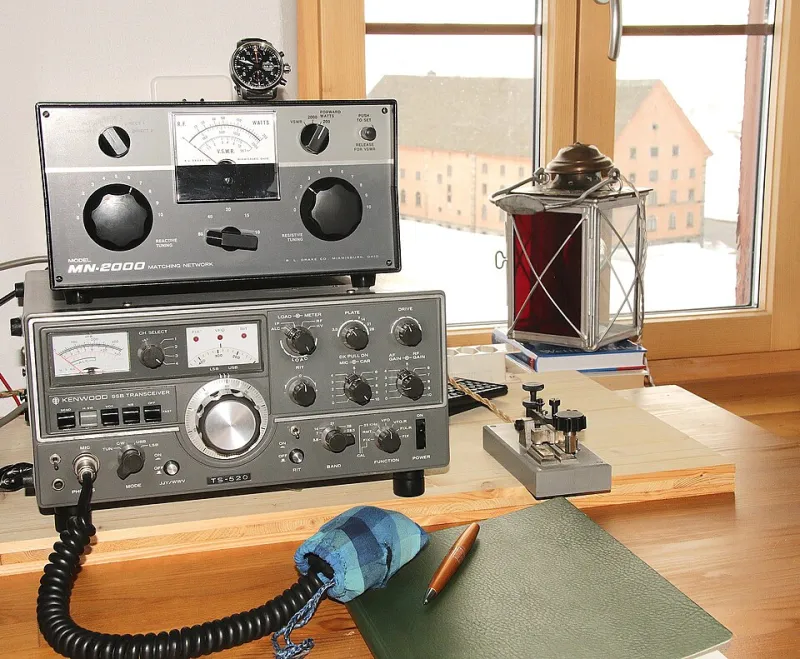
Photo: Hp.Baumeler, CC BY-SA 4.0, via Wikimedia Commons
The call came in at 2:47 a.m. on a frequency nobody under sixty listens to anymore. A ranch hand northwest of Seeley Lake, Montana, was reporting smoke where smoke had no business being. There was no cell signal on that stretch of gravel, no landline within twenty miles, and the nearest sheriff's deputy was a two-hour drive away. So Dale K7RWN keyed his mic and passed the word up the mountain the old way — one crackling transmission at a time.
By sunrise, a fire crew was on it. By the following week, the whole drainage had a name, a perimeter, and an evacuation plan. And by the end of the season, Dale and the crew at the lookout repeater above the valley had logged something like 900 hours of emergency traffic that no satellite, no smartphone, and no fiber-optic line could have carried.
This is the story of the people America keeps forgetting to thank — and then desperately needs.
The Tower That Refuses to Quit
The repeater sits at 7,200 feet in a fire lookout that's been in service since the Eisenhower administration. Its guts are less romantic: a couple of solar panels, deep-cycle batteries, a weather-worn antenna mast, and a shoebox-sized radio that cost less than the truck Dale drove up in. When lightning, ice, or apathy kills the modern stuff — and in the northern Rockies, it does, regularly — this humble setup keeps talking.
I spent most of a season up there with the volunteer operators who maintain the network. They're retired linemen, schoolteachers, a fly-fishing guide, a nurse practitioner. What they share is a conviction that the grid is a suggestion, not a guarantee.
"People think communication is a product," Dale told me, pouring coffee from a battered thermos. "It's not. It's a skill. It's infrastructure. And infrastructure needs somebody who gives a damn."
When the Satellites Blink Out
Here's the uncomfortable truth about the age of the smartphone: coverage maps are marketing documents. Drive the Lolo Pass corridor, the Bob Marshall backcountry, or pretty much any Forest Service road in Montana or Idaho, and your phone becomes a very expensive camera. During last summer's fires, two major cell towers in the region burned outright. Starlink terminals, for all their promise, need power — and power was the first thing to go.
HAM radio needed none of it. A car battery, a wire antenna, and a license could put a survivor on the air from a burned-out driveway. And that's exactly what happened, over and over.
During the evacuation of one valley community, the local HAM club ran net control out of a garage for eleven straight days. They relayed pharmacy requests, livestock logistics, welfare checks on elderly residents, and — memorably — a call for somebody with a stock trailer and the nerve to use it. Somebody did.
The Gray-Haired Problem
The joke inside the hobby is that the average amateur radio operator is "three years past deceased." There's truth in it. But something interesting is happening: wildfire seasons keep getting longer, rural hospitals keep closing, and county emergency managers — the ones who've watched a single downed fiber line sever an entire region — have started showing up at club meetings with grant money and questions.
Enrollment in licensing classes in Montana and Idaho ticked up noticeably after the last two fire seasons. Younger folks are coming in through a side door: off-grid homesteading, overlanding, backcountry hunting. They don't call it a hobby. They call it a backup plan.
Dale's take is blunter. "Every generation relearns that the lights don't have to stay on. We just decided to learn it early."
A Season on the Frequency
The rhythm of lookout duty is its own kind of meditation. Mornings start with a signal check down the chain — repeater to repeater, ridge to ridge, each operator confirming the network is alive. Then the long listening hours, punctuated by weather reports, trail conditions, and the occasional hunter asking if anyone's seen his buddy's truck.
It sounds quaint until the day it isn't. The day it's a heart attack in a dead zone, or a spot fire three miles from someone's barn, or a lost kid whose only lifeline is a voice on a handheld radio that his grandfather taught him to use.
The operators keep paper logs. Every call, every time stamp, every relay. Not because anyone requires it, but because a record is a kind of respect — for the caller, for the responder, for the next person who'll sit in this chair.
The Spark Worth Keeping
There's a reason this fits the Flint & Wolf creed. Flint is the old technology that still makes fire. The wolf is the wild that doesn't care about your coverage bars. HAM radio lives at that exact intersection — a spark kept alive by human hands, passed along ridgelines where the wild doesn't negotiate.
You don't need to climb a lookout to be part of it. Get licensed — it's a $35 test and a weekend of studying. Join your county's ARES group. Throw a wire antenna in your truck. Learn to pass traffic.
Because the next time the mountain goes dark — and in the American West, there's always a next time — somebody's going to key a mic and ask if anyone's listening.
Better if the answer is you.