Half-Wild, Half-Home: What a Wolf-Dog Named Flint Taught Me About Staying
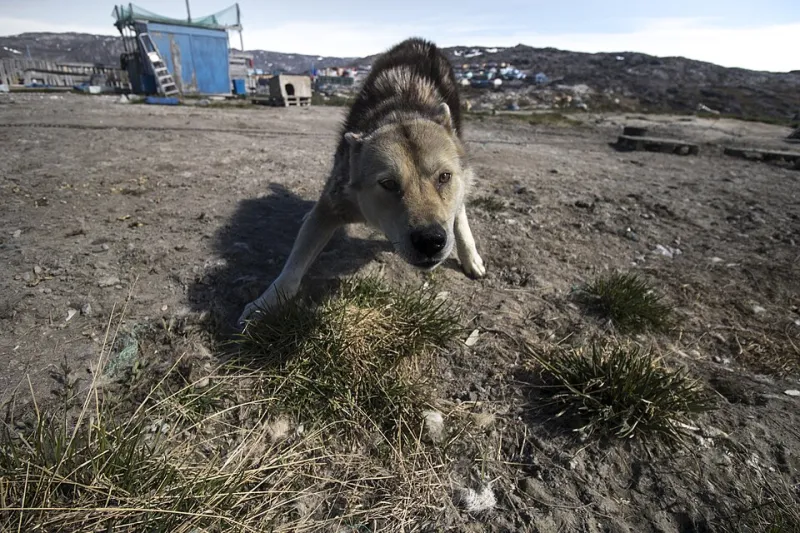
Photo: Buiobuione, CC BY-SA 4.0, via Wikimedia Commons
The shelter volunteer looked at me like I was the problem before I'd even filled out the paperwork.
"You know what he is, right?" she said. "He's not a dog. Not really."
She was talking about the black-and-tan animal in the back run, the one the intake sheet called a "wolf hybrid, probable." Big head, amber eyes, a way of watching you that felt less like curiosity and more like an audit. He'd been returned twice. The notes on his file used words like "escape artist" and "not recommended for first-time owners."
I was thirty-nine years old, four months out of a divorce that emptied a house in Boise, and I had driven to northwest Montana with everything I owned in a truck bed. I raised my hand anyway.
"Neither am I," I said. "A dog, I mean."
The Animal Nobody Wants to Own
Here's the thing about wolf-dogs in America that most people learn the hard way: there are hundreds of thousands of them, and almost nobody is equipped to keep one. Estimates run anywhere from 250,000 to over a million wolf hybrids in the U.S., and sanctuaries like Howling Woods Farm in New Jersey or the Wolf Connection sanctuary in California are perpetually full. Breeders sell them as "wolfy" companions to people picturing a majestic Instagram pet. Then the animal hits maturity, discovers its prey drive, learns to open gates, and ends up chained in a yard or surrendered to a shelter that legally cannot adopt it out.
Somewhere in that pipeline is where Flint came from. Named by somebody else — the shelter kept the name, and I kept the name, because it felt right in a way I couldn't explain yet. Stone that makes sparks. A thing you strike against something hard to get fire.
The laws around him were a mess, which is typical. Montana leaves wolf-dog regulation mostly to counties. Idaho requires a permit. Some cities ban them outright. Your hybrid can be "a wolf" under one statute and "a dog" under another, depending on which paperwork is in play. Flint existed in that legal gray zone the same way I existed in a personal one — not quite wild anymore, never going to be fully tame.
The First Winter Was a Negotiation
I want to tell you he saved me in some cinematic way, and he did, but not quickly and not gently.
The first month, Flint would not come within fifteen feet of me. I'd sit on the porch of the rental outside Eureka with a book I wasn't reading and he'd watch me from the tree line like I owed him money. A trainer I called — one of the few in the state who'd work with high-content mixes — told me the same thing three times: "Stop trying to be his owner. Be the most predictable thing in his world."
So that's what I did. Same time every morning, same path to the woodpile, same split of venison and kibble in the same bowl. No surprises. No chaos. I was a wreck on the inside and a metronome on the outside, and somewhere around week six, Flint decided that was a language he could live with.
He showed up at my feet during a snowstorm and didn't leave. That was the whole ceremony. No leash, no treat, no trick. He just decided.
What a Half-Wild Animal Asks of You
People ask what it's like living with a wolf-dog and I usually lie and say "like a big husky." It's not. It's like co-signing a loan with something that will never fully trust you and never fully stop testing you.
Flint needs eight miles a day or he redesigns my fencing. He's climbed a six-foot fence, dug under a gate, and once figured out the latch on the mudroom door while I was in town buying the extra latch. He's terrified of the vacuum but unbothered by -20 degree cold snaps. He will not fetch. He has never once fetched. He will, however, stand between me and a bull elk at forty yards with his hackles up, which is its own kind of problem.
But here's what he actually did for me, the thing I couldn't do for myself: he made staying non-negotiable.
The winter after the divorce, I had a list of reasons to drive back to town, back to a lease, back to something easier. Every one of those reasons required me to abandon a fence line, a woodpile, and an animal who'd been abandoned twice already by people who found him too much. I couldn't do it. Not because I was strong — because he wasn't going to understand, and I couldn't stand the idea of being a third entry on his intake sheet.
So I stayed. And staying, it turns out, is a skill. You get better at it. The days stack up. You split more wood than you need. You learn the difference between loneliness and solitude, which is mostly a matter of whether you leave the porch light on for something.
The Controversy, Honestly
I'm not going to pretend adopting Flint was the responsible choice, because for most people it isn't. The rescues will tell you flatly: wolf-dogs are not pets, they're a ten-to-fifteen-year commitment to an animal with wild wiring and a domestic need for routine. If you want a wolf, volunteer at a sanctuary. If you want a dog, go to a shelter and save one of the thousands of perfectly good mutts on euthanasia lists tonight.
I got Flint because we matched — two things that had been given up on by people who wanted something easier to love. That's not a recommendation. It's a confession.
Where We Are Now
It's been three years. Flint is eight now, graying at the muzzle, still running point on our morning loop up the logging road like he's scouting for the whole valley. Some days he's a dog — head in my lap, groaning when I scratch his chest. Most days he's something older than that, something that remembers being wild even if he never really was.
I named the site I write for after a story like this one. Flint and a wolf. Sparks and teeth. The whole brand is really just what I learned on that porch in Eureka: you don't heal by getting soft. You heal by taking on something harder than you, staying predictable when everything in you wants to run, and striking yourself against a hard enough stone until something catches.
He's asleep by the wood stove as I write this. Half-wild, half-home.
Same as me.