Every Broken Point Is a Lesson With an Edge
The first arrowhead I ever made took four hours. It lasted eleven seconds.
One wrong pressure flake and the point snapped clean in half — a failure so total, so instantaneous, that I actually laughed out loud at my workbench. There was no save button. No version history. No undo. Just two useless halves of Georgetown flint and a small, hot flare of humiliation in my chest.
I've been chasing that feeling ever since. Let me explain.
Stone Is the Honest Critic
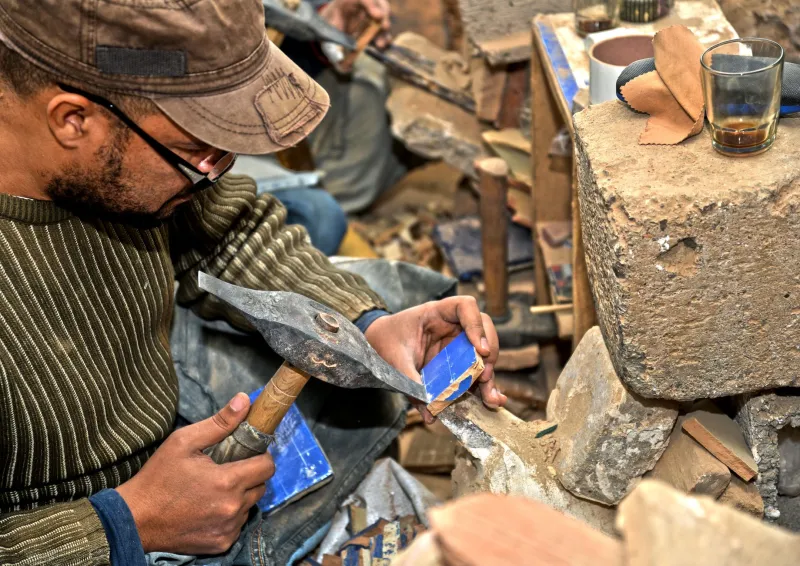
Here's what nobody tells you about knapping: the rock doesn't negotiate. When your angle is wrong, when your platform is weak, when your strike has too much ego and not enough geometry, the stone tells you immediately. Hinge fracture. Step scar. Snap.
There's no partial credit in flint. Compare that to the creative work most of us do now. I've written articles that were structurally broken — bad thesis, weak spine — and they still published. They still got likes. The failure was real, but it was invisible, buried under a feed that rewards finished over correct.
Stone doesn't have a feed. Stone has physics. And physics, it turns out, is the only editor who never flatters you.
Failure as a Feature, Not a Bug
Modern maker culture has a problem: we've optimized away the destruction. 3D printing, cloud saves, AI-assisted everything — the friction is gone, and with it, the learning. You can spend an entire creative career without producing anything that can truly, permanently fail.
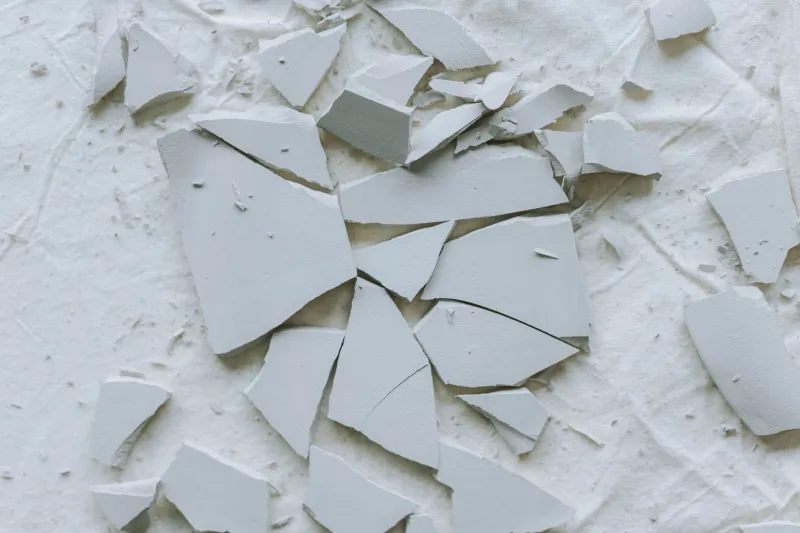
Knapping refuses that arrangement. Every mistake is load-bearing. When I broke that first point, I didn't just lose the point — I learned exactly where my strike had drifted, because the fracture pattern spelled it out like a diagram. The rock keeps receipts. Six months later, I could read a failed spall like a doctor reads an X-ray.
That's the trade: you give up safety and get understanding. Most modern workflows offer the opposite, and we're poorer for it.
What This Means for Anyone Who Makes Things
I'm not saying every designer should take up flintknapping, though honestly, worse hobbies exist. I'm saying the shape of the lesson transfers.
Ask yourself: when was the last time your work could fail in a way you couldn't talk your way out of? A weld that cracks. A joint that won't hold. A batch of bread that's a brick. Destructive feedback — the kind that ruins the piece instead of just bruising the review — teaches faster than a decade of gentle encouragement.
The people I've met in the knapping community, from weekend hobbyists in Ohio to master knappers at Georgia's Quartz Mountain gatherings, all share one trait: they're weirdly calm about failure. Not resigned. Calm. They've internalized something the rest of the creative world is still negotiating with.
The Long Game Is Made of Broken Pieces
Twenty years in, I still break points. Fewer now, and for more interesting reasons, but still. The difference is what happens after the snap. Old me would rage. Current me picks up the halves, reads the fracture, adjusts the platform angle, and starts the next one.
Flint breaks more than tools. It breaks the part of you that needs the work to be perfect on the first try. And what grows in that broken place is patience — the slow, gritty kind that no productivity app has ever managed to sell.
So here's my pitch: find something in your life that can genuinely, permanently fail. Let it break you a few times. Then keep striking.
The edge you're looking for is on the other side of the snap.