Forget the Wolf. The Coyote Is the Real American Legend.
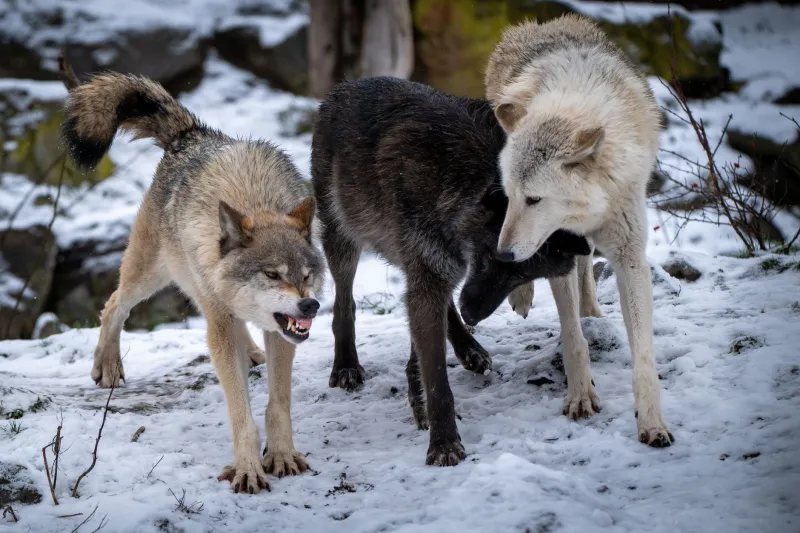
There's a certain romance to the wolf that Americans can't shake. We hang its likeness on our walls, name our trucks after it, fight lawsuits over it. The wolf is the mascot of the wild edge—the poster child for everything untamed.
But here's my problem with all that: the wolf is a symbol. The coyote is a fact.
The Animal That Refused to Lose
Consider the record. Wolves were nearly erased from the Lower 48 and needed decades of legal protection, federal dollars, and human effort to claw back a foothold. The coyote? Nobody saved the coyote. The coyote saved itself.
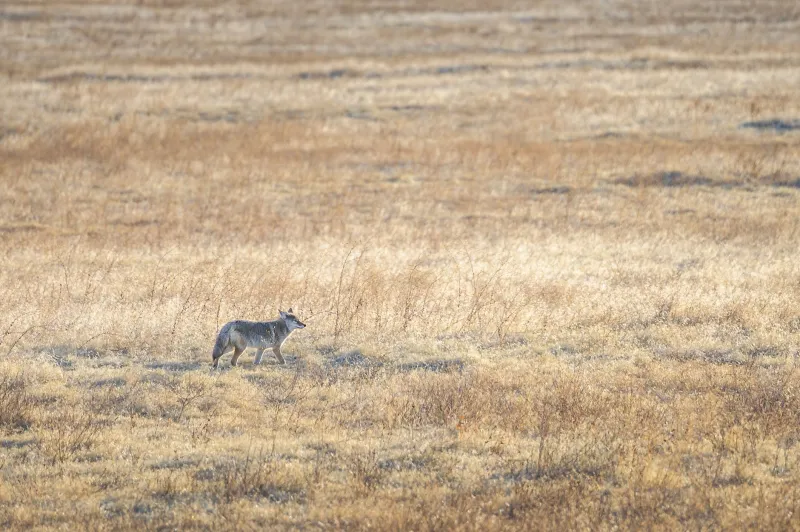
We poisoned it, trapped it, shot it from airplanes, and put bounties on its head for over a century. The result: it expanded its range from the prairies of the West to every state in the continental U.S., from the Alaskan tundra to the suburbs of Atlanta. There are coyotes in Chicago—thousands of them—living in the strip malls and drainage ditches, raising pups under the shadow of the L train. One was famously photographed inside a Chicago bar. Another made it to a rooftop in Queens.
No other wild mammal on this continent has done that. Not the raccoon, not the whitetail, not the black bear. The coyote looked at everything we threw at it and treated it like a training program.
Adapt or Get Eulogized
What makes the coyote remarkable isn't toughness in the dramatic sense. It's flexibility. Wolves are specialists—pack hunters that need big prey and big territory. Coyotes are generalists to their core. They'll take a deer if they can, a rabbit if they must, a cheeseburger out of a trash can if it's Tuesday.
They've even rewritten their own biology on the move. Eastern coyotes, pushed into wolf country generations ago, picked up coywolf genetics from remnant wolf populations. The result is a bigger, deer-capable animal that didn't exist when your grandfather was born. Evolution usually moves in geological time. Coyotes moved in one.
There's something almost rude about it. We like our wilderness to be fragile, to need us. The coyote doesn't need anybody.
The People Who Chase It
Spend time around the folks who know coyotes best—ranchers, predator hunters, poets—and you'll find a strange, grudging respect that borders on obsession.
Ranchers lose livestock to coyotes and spend fortunes fighting them, but ask around and you'll hear stories that sound like folklore: the coyote that ran a decoy line through three pastures, the female that raised pups in a culvert fifty yards from the farmhouse. Predator hunters—the night-calling crowd with electronic rabbits and thermal optics—will tell you the coyote is the smartest animal they've ever hunted, an opponent that educates itself mid-season. Miss one shot, they say, and you've just paid for the whole neighborhood's college.
And the poets? Walt Whitman heard the prairie's voice in the wolf, but it's the coyote's song—the yips and howls at dusk—that's become the actual soundtrack of the American West. If you've camped anywhere from Montana to West Texas, you know it. It sounds like laughter. It sounds like the land talking back.
The Case for the Underdog
Here's the contrarian argument in plain terms: the wolf represents the wild we lost and want back. The coyote represents the wild that never left. One is nostalgia. The other is a neighbor.
And if resilience is the virtue we claim to admire—if grit, adaptability, and refusal to quit are what we celebrate in our own founding myths—then the coyote is the most American animal on four legs. It's the homesteader, the long-hauler, the small-town kid who made it in the city without asking permission. It thrives precisely because we've never stopped trying to kill it.
The wolf needs wilderness. The coyote makes do with whatever's left.
So the next time you hear that lonesome yipping across a dark field—behind a subdivision, past a Walmart, somewhere between the highway and the hayfield—tip your hat. That's not a bad rap you're hearing. That's the sound of the longest-running winning streak in American wildlife, still going, still laughing, still here.