Twenty-Something, Sixteen Dogs, Zero Cell Service: The Kids Keeping Alaska's Sled Trails Alive
There's a moment somewhere around mile 40 of the Iditarod Trail, usually in the dark, usually around minus 20, when every rookie musher asks themselves the same question: why?
The twenty-somethings running Alaska's sled trails today have a surprisingly short answer. They'll tell you it's the dogs. Then they'll tell you it's the silence. Then, if you buy them coffee at a checkpoint, they'll tell you the truth — that they were drowning in rent and screens back home, and this was the one life left in America that still demands everything of you.
Meet the New Kennel
Mika Teller, 24, gave up a barista job in Anchorage two winters ago and now runs 14 dogs out of a homestead outside Willow. "My generation got told to follow our passion," she laughs, hands wrapped around a thermos. "Turns out my passion is picking up frozen poop at four in the morning."
Down the trail in Two Rivers, 27-year-old Dane Okafor came north from Chicago after watching a documentary about the Iditarod in his studio apartment. He saved for three years, apprenticed under an old-timer, and now sleeps in a wall tent with a puppy yard he built himself from scavenged lumber and stubbornness.
And in Knik, 22-year-old Jess Redfern is the third generation of her family to run the trail — but she's the first to finance it through TikTok. Her race-prep videos have pulled in more sponsorship money than her father's entire kennel did in a decade. She has complicated feelings about that. "The internet pays the vet bills," she shrugs. "The trail doesn't care about the internet."
The Brutal Math of a Dog Team
Here's what nobody tells you at the mushing school weekend: a competitive team is a small business with 16 employees who eat every day.
- Startup kennel: $15,000–$40,000 for dogs, gear, and a truck with boxes
- Annual food: $10,000–$20,000. Sled dogs burn 5,000+ calories a day in winter
- Vet care: $3,000–$8,000, more in race years
- Entry fees and logistics for a mid-distance race: $2,000–$5,000
- Trail time: essentially free, which is the only mercy in the whole ledger
Most young mushers patch it together — commercial guiding in summer, fish camp work, sponsorships in dog food and booties, and increasingly, crowdfunding. The old kennel model was a fishing boat and a wife with a day job. The new one is a GoFundMe and a brand deal.
Racing a Warming Map
Then there's the trail itself, and it's changing under their runners.
The 2023 Iditarod start was moved again for lack of snow. Fairbanks has hosted starts that historically belonged to Anchorage. Freeze-up comes later, breakup comes earlier, and the Alaska Range's open water and bare ice are no longer anomalies — they're line items on a race strategy.
"My grandfather had a 200-year snow record to learn from," says Redfern. "I've got ten years of data and it's all bad news. You learn to read rivers differently. You carry more booties. You don't sleep as deep."
Climate change hasn't killed sled dog racing. But it has raised the price of admission, in money and in risk, exactly when the sport can least afford it.
Why Keep Running?
Skeptics ask why anyone would pour their twenties into a sport with shrinking sponsors and a shrinking season. The young mushers have heard the question. They usually answer with the dogs.
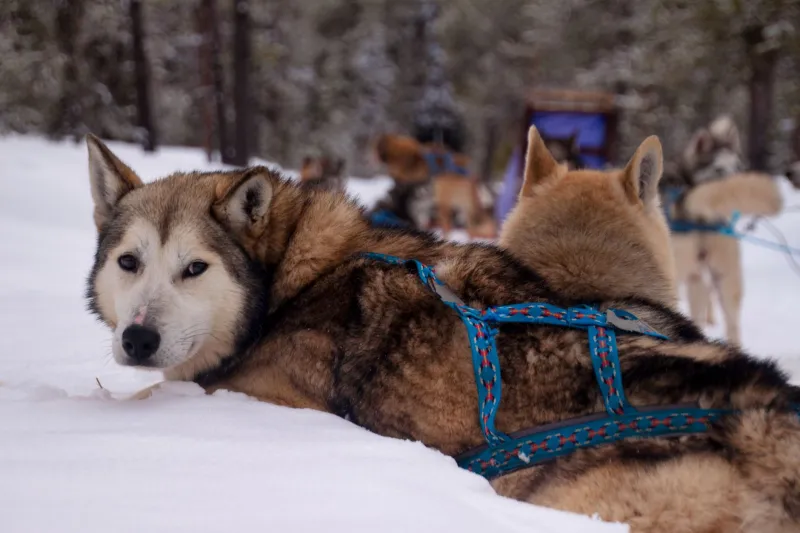
Watch Teller harness her lead dog, Biscuit, at a checkpoint — the animal screaming with joy, leaning into the tug line like it's the only thing that has ever mattered — and the economics stop mattering for a second. This is the last great working partnership between Americans and dogs, a job that predates roads, planes, and the internet, and it still works exactly like it did a hundred years ago.
"Everything back home was a subscription," Okafor told me, somewhere past the halfway point of his first 300-mile race. "This is the one thing I own. The dogs, the sled, the trail. Nobody can stream it for me."
The dogsled isn't dead. It's just been handed to a generation that had to fight harder for it — and they're running with it anyway.
Flint & Wolf followed these teams during the 2025 season. No dogs were harmed in the making of this story; the author's pride was not so lucky.