Pull Over and Pocket a Spark: Where to Find Knappable Stone on America's Highways
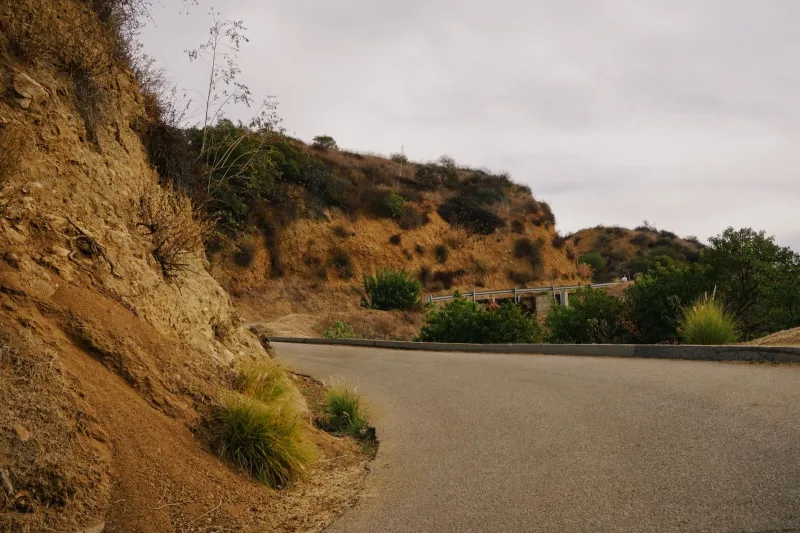
Somewhere on a gravel shoulder outside of San Antonio, I watched a friend step out of a rented Corolla, walk twenty feet, and pick up a chunk of chert good enough to spark a fire off a steel striker. He'd been driving all day. He hadn't planned anything. He just knew what to look for.
That's the quiet magic of American geology: knappable stone is everywhere, and a lot of it is hiding in plain sight along the roads you already drive. This isn't a hobby that requires permits, gear, or a guide—just a sharp eye, a little legal homework, and the patience to pull over.
Know What You're Looking At
Flint, chert, and their cousins are all microcrystalline quartz—rock that breaks with a razor edge and throws a spark. The tells are simple:
- Conchoidal fractures: smooth, curved, shell-like surfaces where the rock broke. If it looks like broken glass, you're close.
- Waxy luster: fresh breaks have a faint sheen, not a dull grain.
- Hardness: it should scratch glass and laugh at a steel knife.
- Color range: gray, tan, white, red, honey, banded—color doesn't matter much, fracture does.
Five Stone Deposits Worth the Detour
1. Ohio Flint — Flint Ridge, OH. The state gemstone of Ohio, and for good reason. Flint Ridge's rainbow-hued flint—reds, blues, and grays—was traded across the continent a thousand years before Interstates 70 and 70-west crossed it. Flint Ridge State Memorial has a small quarry area where surface collecting is permitted by hand; check posted rules on your way in.
2. Texas Chert — Central and West Texas. Practically the whole Edwards Plateau is laced with chert nodules, and road cuts on Ranch-to-Market roads between Austin, San Antonio, and Fort Stockton can be goldmines. Texas chert runs tan to gray and knaps beautifully when heat-treated.
3. Missouri Burlington Chert — The Ozarks. Streambeds and road cuts around the Missouri Ozarks produce abundant cream-and-gray Burlington chert, a knapper's standby for generations. Gravel bars after a good rain are the move.
4. Oregon Obsidian — Glass Buttes, OR. Off Highway 20 in central Oregon, Glass Buttes is a landscape of black glass. Surface collecting for personal use is generally allowed on BLM land here—confirm current regulations with the local BLM office, because rules shift.
5. Indiana Hornstone — Southern Indiana. Harrison County's hornstone was a favorite of prehistoric toolmakers across the Midwest. Road cuts and creek beds in the far southern hills still yield it.
The Legal Part (Read This Twice)
Here's where road-trip rockhounding goes wrong. Every state, and honestly every land manager, has different rules:
- Private land: never collect without permission. A knock on the door and a polite ask works more often than you'd think—ranchers appreciate a visitor who asks first.
- State parks and memorials: usually off-limits or heavily restricted. Flint Ridge is a rare exception, not the norm.
- BLM and National Forest land: often allows small personal-use surface collection, with quantity limits. Call the district office. It's a ten-minute call that saves you a federal problem.
- Road rights-of-way: collecting on state highway shoulders ranges from tolerated to ticketed depending on the state. When in doubt, find the same material on adjacent legal ground.
Field Ethics of the Roadside Knapper
The old knapping rule applies: take a little, leave a lot. Fill in any holes you dig. Don't collect near archaeological sites—if you find worked points or flakes that look human-made, leave them be; artifacts are protected by law and belong to the record, not your glovebox.
And practical safety: pull fully off the pavement, watch for traffic, wear your hi-vis if you're anywhere near a highway shoulder. No piece of chert is worth a fender bender.
Why It's Worth the Stop
Anyone can buy a flint knapping kit online. There's a different kind of satisfaction in the stone you found yourself—pulled from a cut bank outside Amarillo or a creek bed in the Ozarks, still dusty from the ground it sat in for a few million years. When you strike that spark off a rock you personally rescued from a roadside, you're not doing a hobby. You're closing a loop that runs back through every human who ever pulled over, squinted at a rock, and thought: that one.
Keep a bucket in the trunk. Keep your eyes on the road cuts. The continent is studded with sparks, and most people drive right past them.