Four Hours to the Light: Nights With the Last Keepers of America's Living Lighthouses
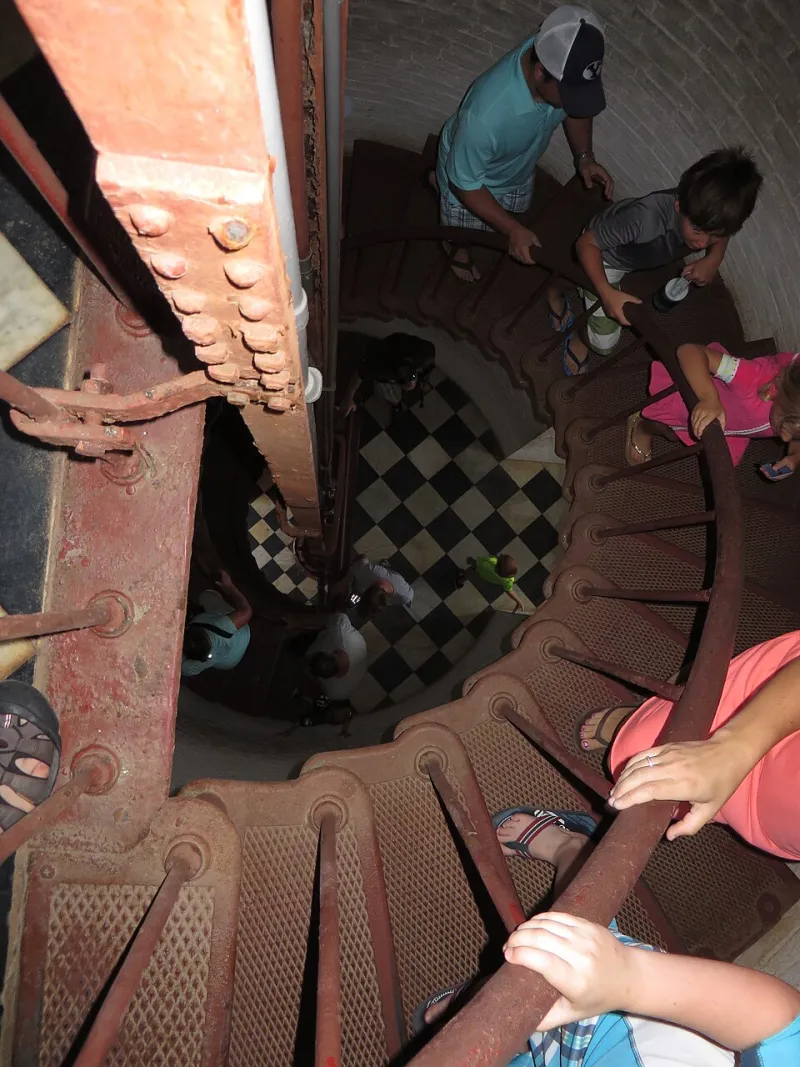
Photo: Ken Lund from Reno, Nevada, USA, CC BY-SA 2.0, via Wikimedia Commons
The Stairs Don't Care If You're Tired
The tower at Seguin Island sits two miles off the Maine coast, and its spiral staircase is 63 steps of iron that have been climbed roughly every four hours since 1795. Most of that climbing was done by keepers long dead. Some of it is still being done by people very much alive.
I landed on the island on a gray September afternoon, ferried out by the nonprofit that now keeps the light staffed, and met the two volunteers splitting the night watch. Their job description, as one of them — a retired Merchant Marine named Dale — put it: "Walk up. Check the light. Walk down. Repeat until sunrise. Then fix whatever the ocean broke."
That's it. That's the whole job. And it turns out that's everything.
Why a Machine Still Needs a Person
Here's the part that surprised me: the light itself barely needs them. Modern LED beacons, solar arrays, remote monitoring that pings a Coast Guard station in Boston if anything drifts out of spec. Automation won, decisively, in the 1980s and '90s. The Coast Guard dismantled the last formal lighthouse keeper positions decades ago.
So why is Dale up there?
Because the light is one thing and the place is another. Seguin's foghorn, its Fresnel lens — one of the few first-order lenses still turning in American service — the boathouse, the museum, the roof against a Nor'easter. Machines monitor. They don't maintain. They don't notice the seam in the lantern room gasket starting to weep, or the gulls nesting somewhere they'll regret, or the way a barometer falling all afternoon means you should batten the museum shutters tonight and not when the alarm goes off.
Nonprofits up and down the coast — Maine, Michigan, the Outer Banks, the Oregon shore — figured out that a live-in caretaker is cheaper than storm damage and irreplaceable than anything else on the property. So the keeper position came back, unofficially, in civilian clothes.
The Psychology of Guarding a Shoreline Nobody Sees
The second volunteer, a schoolteacher from Portland named Ruth, described the night rhythm to me on the walkway above the keeper's quarters. Every four hours. You set your rhythm around it — dinner, climb, sleep, climb, coffee, climb. She's done month-long stints for six seasons now.
"People think it's lonely," she said. "It's not lonely. Lonely is wanting people and not having them. This is solitude. It's the thing you can't get anywhere anymore."
She's right in a way that's hard to explain until you've stood in a lantern room at 2 a.m. with the beam sweeping overhead every 7.5 seconds and the Atlantic making its arguments against the rocks below. Nobody is watching you work. Nobody will ever know if you cut a climb short. The work is entirely between you and the dark.
There's a Flint & Wolf kind of honesty in that. No audience. No metrics. Just a task that has to be done again and again, forever, by somebody willing to be the somebody.
A Night in the Rotation
I stayed for one full cycle, which is a tourist's version of the job and I won't pretend otherwise. But here's how it went:
11:40 p.m. Climb. Check the rotation mechanism by ear — a rhythm you learn like a heartbeat. Wipe salt haze off the storm panes. Log wind speed, visibility, lamp status in a logbook that goes back to entries written in fountain pen.
3:35 a.m. Fog rolls in around the island like it owns the lease. The diaphone foghorn fires — a sound Dale describes as "a dinosaur clearing its throat" — and I understand, standing under it, why coastal towns once considered the horn a lullaby.
6:50 a.m. Sunrise climb. The light still burns against the dawn, the way it has through every storm this tower has ever seen. Ruth checks the solar charge controllers, scrapes bird mess off a sensor, and makes a note to tighten a lag bolt on the walkway rail before the next blow.
Four hours. Check the light. Walk down. Repeat.
What the Beam Is Actually For
I asked Dale, on the last morning, whether the whole thing was sentimentality — humans keeping humans in a lighthouse so the humans feel something. He thought about it longer than I expected.
"Lobstermen still use it," he said. "Kayakers, sailors, the Coast Guard when somebody's in the water at night. The light doesn't know it's nostalgic. It's just a light. And it's on."
That's the whole creed, really. The beam doesn't know it's a symbol. It just runs, every 7.5 seconds, because somebody climbed the stairs to make sure it would.
Most of us will never keep a light. But we all keep something — a shop, a family, a craft, a fire. The keepers just do it where the wind can watch. And every four hours, on a rock two miles off the Maine coast, somebody's climbing the stairs again.
The dark doesn't take a night off. Neither do they.